
5 Ways Parents Can Supplement a Daycare Curriculum at Home
14 min read
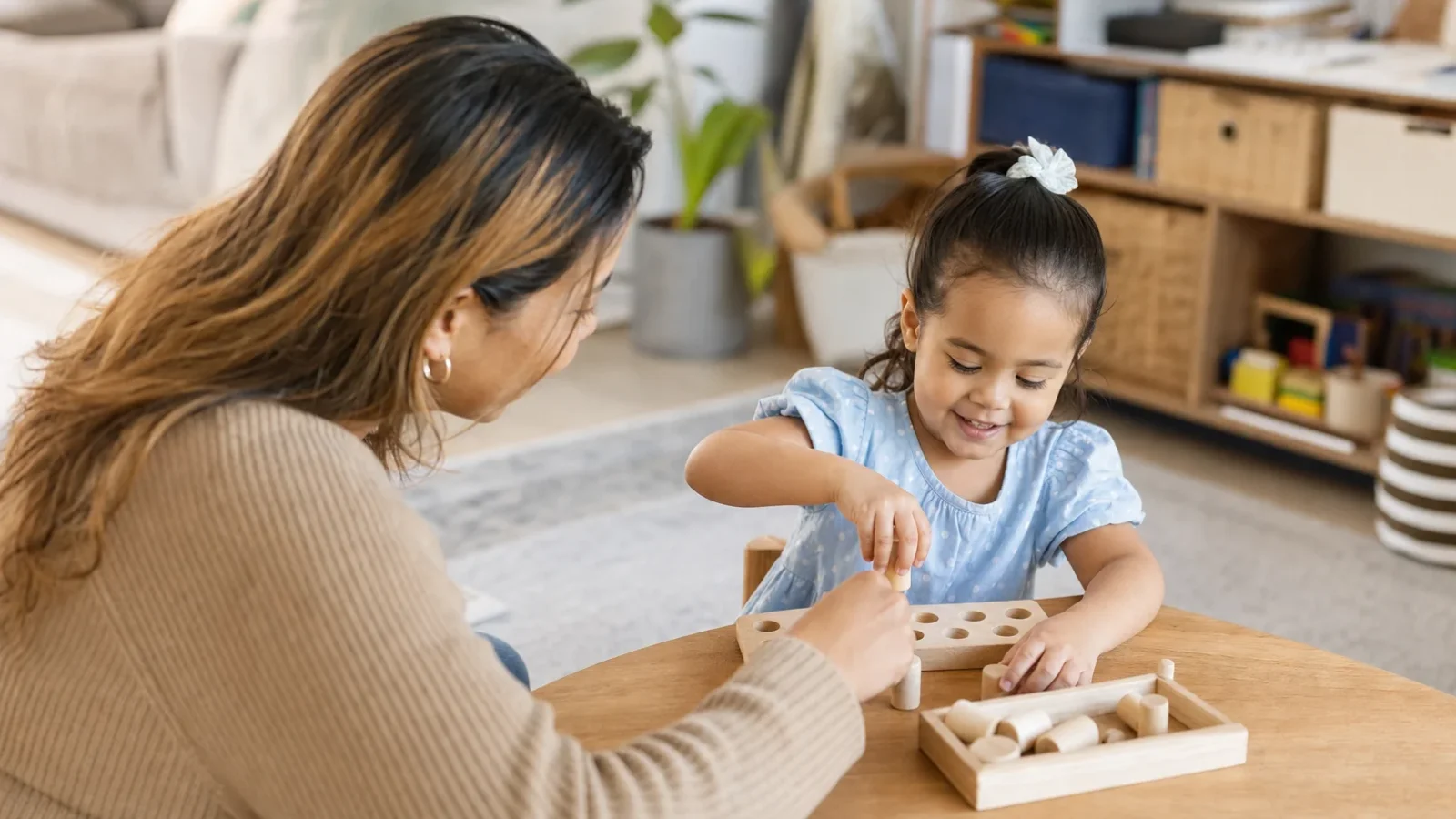
A strong daycare curriculum can support children’s growth across many areas:
- Language
- Early literacy
- Early math
- Social development
- Emotional regulation
- Physical development
- Creativity
- Problem-solving
- Independence
- Curiosity
Families can strengthen that learning at home, but “supplementing the curriculum” should not mean turning evenings into another classroom.
Young children learn best through:
- Play
- Conversation
- Repetition
- Movement
- Relationships
- Exploration
- Predictable routines
The goal is not to make a child complete more academic work.
The goal is to connect what the child experiences at daycare with ordinary family life.
What a Good Early Childhood Curriculum Looks Like
A high-quality curriculum should address the whole child rather than focusing only on letters and numbers.
Look for experiences involving:
- Relationships
- Communication
- Gross-motor movement
- Fine-motor development
- Play
- Creativity
- Nature
- Music
- Early literacy
- Early math
- Science
- Social skills
- Emotional development
- Self-help skills
A strong curriculum is usually:
- Developmentally appropriate
- Flexible
- Play based
- Culturally responsive
- Inclusive
- Hands on
- Built around children’s interests
- Connected to observation
Children should have opportunities to:
- Choose activities
- Explore materials
- Ask questions
- Solve problems
- Move
- Pretend
- Work with others
- Spend time outdoors
- Rest
A curriculum should not be judged only by how many worksheets come home.
Ask the Program What Children Are Learning
Before choosing home activities, ask the teacher:
- What interests the group right now?
- Which books are they reading?
- What songs are they singing?
- Which skills are emerging?
- What classroom routines are important?
- Is my child practicing anything specific?
- Are there materials or activities to avoid duplicating?
- How can we support learning without pressure?
Useful communication may come through:
- Pickup conversation
- Weekly newsletter
- Classroom app
- Lesson-plan summary
- Family conference
- Display board
- Portfolio
- Photos
Parents do not need a detailed lesson plan every day.
A simple update such as “the children are comparing sizes and talking about insects” is enough to inspire natural home connections.
1. Read, Talk, and Tell Stories Together
Shared reading is one of the simplest and strongest ways to support language and literacy.
Reading together can build:
- Vocabulary
- Listening
- Comprehension
- Attention
- Print awareness
- Imagination
- Narrative skills
- Emotional connection
Follow the Child’s Interest
The child does not need to sit still through every page.
It is okay to:
- Skip pages
- Read the same book repeatedly
- Talk about pictures
- Let the child turn pages
- Stop early
- Act out the story
- Choose nonfiction
- Make up a new ending
Repetition helps children learn.
A favorite book read many times can support deeper understanding than a constant stream of new books.
Ask Open-Ended Questions
Instead of testing the child with:
- What color is this?
- What letter is that?
- How many are there?
also try:
- What do you think will happen?
- How does the character feel?
- What do you notice?
- What would you do?
- Why do you think that happened?
- Can you tell the story in your own way?
Questions should invite conversation rather than make the child feel examined.
Tell Family Stories
Storytelling does not require a book.
Talk about:
- The child’s first day at daycare
- A family trip
- A grandparent’s childhood
- What happened at breakfast
- A favorite pet
- A funny mistake
- A familiar routine
Family stories help children learn:
- Sequence
- Memory
- Vocabulary
- Identity
- Cause and effect
Use the Home Language
Families should speak, sing, tell stories, and read in the language they know best.
A strong home language supports:
- Relationships
- Identity
- Communication
- Later language learning
Parents do not need to replace the home language with English unless they want to use both.
Build Reading Into Routines
Possible reading times include:
- Bedtime
- Breakfast
- Bath time
- Waiting room
- Bus ride
- Quiet time
- Before dinner
- Weekend morning
Keep books within reach.
Use:
- Library books
- Board books
- Homemade books
- Family photo books
- Magazines
- Menus
- Signs
- Labels
2. Turn Everyday Routines Into Learning
Home routines already contain math, language, science, and problem-solving.
Parents do not need to create a separate lesson.
Mealtime
Children can:
- Count plates
- Match utensils
- Compare cup sizes
- Notice colors
- Pour water
- Stir
- Spread
- Talk about taste and texture
- Follow a sequence
Examples:
- We need four spoons. How many do we have?
- Which bowl is larger?
- What changed when we mixed the yogurt and fruit?
- What comes first when we set the table?
Laundry
Laundry can support:
- Matching
- Sorting
- Size comparison
- Color recognition
- Responsibility
- Fine-motor skills
Children can:
- Match socks
- Sort light and dark colors
- Fold washcloths
- Put clothes in drawers
- Compare adult and child clothing
Keep expectations appropriate.
A preschooler may enjoy matching socks but not folding an entire load.
Grocery Shopping
Use shopping for:
- Counting
- Vocabulary
- Classification
- Planning
- Comparison
Try:
- Find three red apples.
- Which container feels heavier?
- Can you find something that starts with the same sound as “milk”?
- Which foods need refrigeration?
Avoid turning the entire trip into questions.
Let the child observe and help naturally.
Getting Dressed
Children can practice:
- Sequencing
- Independence
- Fine-motor skills
- Weather awareness
- Choice
Ask:
- What goes on first?
- Which shoes match?
- What should we wear in the rain?
- Which zipper is easier?
Cleanup
Cleanup can support:
- Classification
- Following directions
- Cooperation
- Memory
- Responsibility
Try:
- Put all the blocks in this basket.
- Cars go here and animals go there.
- Let’s find five crayons.
- What should we put away first?
Use a short song or visual cue.
Cleanup should be a shared routine, not a punishment.
Cooking
Safe kitchen tasks can build:
- Measurement
- Sequence
- Vocabulary
- Fine-motor control
- Scientific thinking
- Confidence
Children may:
- Wash produce
- Tear lettuce
- Stir
- Pour premeasured ingredients
- Count scoops
- Arrange food
- Notice changes caused by heat
Maintain close supervision and follow food-safety rules.
3. Use Play to Reinforce New Ideas
Play is not a break from learning.
Play is one of the main ways young children learn.
Pretend Play
Children can act out:
- Grocery store
- Doctor
- Restaurant
- Bus ride
- Daycare
- Fire station
- Family routines
- Animal clinic
Pretend play supports:
- Language
- Cooperation
- Perspective taking
- Emotional processing
- Problem-solving
- Sequencing
Use ordinary household items when safe:
- Empty containers
- Fabric
- Boxes
- Paper
- Toy dishes
- Old notepads
- Dress-up clothes
Block Play
Blocks can support:
- Balance
- Spatial reasoning
- Counting
- Pattern
- Cooperation
- Engineering
- Persistence
Try:
- Can you build a bridge?
- Which block makes the tower stronger?
- How many blocks tall is it?
- What could we add so the animals have a home?
Let the child solve problems before stepping in.
Puzzles and Sorting
Use:
- Age-appropriate puzzles
- Shape sorters
- Matching cards
- Household objects
- Large buttons only when developmentally safe
- Socks
- Toy animals
- Large blocks
Children can sort by:
- Color
- Shape
- Size
- Use
- Texture
Avoid tiny pieces for children who mouth objects.
Outdoor Play
Outdoor learning can include:
- Collecting large leaves
- Watching insects
- Comparing shadows
- Jumping
- Climbing
- Digging
- Listening for sounds
- Noticing weather
- Drawing with sidewalk chalk
Ask:
- Which shadow is longer?
- What do you hear?
- Where do you think the ant is going?
- What changed after the rain?
Nature offers endless learning without worksheets.
Movement Games
Movement supports:
- Balance
- Coordination
- Listening
- Body awareness
- Self-regulation
- Memory
Try:
- Follow the leader
- Freeze dance
- Animal walks
- Hopscotch
- Red light, green light
- Simple obstacle course
- Yoga poses
- Tossing and catching
Add learning naturally:
- Jump three times.
- Move like a slow turtle.
- Find something shaped like a circle.
Keep Play Open Ended
Open-ended materials have many possible uses.
Examples include:
- Blocks
- Clay
- Cardboard boxes
- Fabric
- Crayons
- Large loose parts
- Water
- Sand when safely managed
Open-ended play supports creativity better than an activity with only one correct result.
4. Create Art, Music, and Hands-On Experiences
Creative activities support far more than artistic skill.
They can build:
- Fine-motor control
- Planning
- Sensory exploration
- Self-expression
- Language
- Persistence
- Confidence
Process Art
Process art focuses on exploration rather than copying an adult model.
Provide:
- Crayons
- Washable paint
- Large paper
- Chalk
- Sponges
- Stamps
- Collage materials too large to choke on
- Child-safe glue
Let the child decide:
- What to make
- Which colors to use
- When the work is finished
- Whether the picture represents something
Avoid correcting the child’s art.
A purple tree is still valuable creative work.
Talk About the Process
Instead of:
- That is beautiful.
- What is it?
try:
- You used long blue lines.
- I noticed you mixed two colors.
- Tell me about what you made.
- Which part was hardest?
- What did you enjoy?
Descriptive comments support language and reflection.
Music
Music activities can include:
- Singing classroom songs
- Clapping rhythms
- Dancing
- Homemade instruments
- Listening to different music styles
- Singing family songs
- Making up new words
Music supports:
- Memory
- Pattern
- Language
- Coordination
- Culture
- Emotional expression
Play Dough and Clay
Manipulating dough can strengthen hands used for writing and self-care.
Children can:
- Roll
- Pinch
- Flatten
- Cut with child-safe tools
- Make shapes
- Form letters
- Create pretend food
Check ingredients for allergies.
Supervise children who may eat the material.
Simple Science
Safe science experiences can include:
- Melting ice
- Mixing colors
- Watching seeds grow
- Comparing objects that sink or float
- Observing shadows
- Exploring magnets with large, intact, child-safe materials
- Testing which paper airplane travels farther
Ask the child to predict, observe, and explain.
The goal is not a correct answer.
The goal is curiosity.
Display the Child’s Work
Displaying selected work can communicate that the child’s effort matters.
Possible places include:
- Refrigerator
- Bulletin board
- Frame
- Digital family album
- Child-level display
Ask permission before discarding or photographing work when the child is old enough to participate.
5. Build a Strong Family–Teacher Partnership
Home learning is more effective when families and teachers exchange useful information.
Share What the Child Enjoys
Tell the teacher:
- Favorite books
- Current interests
- New words
- Family events
- Cultural traditions
- Skills practiced at home
- Concerns
- Sleep changes
- New fears
- Questions
This helps teachers connect curriculum to the child.
Ask for Practical Ideas
Instead of asking:
What should we teach at home?
try:
- Which song could we sing this week?
- Is there a book that connects to the classroom theme?
- Which self-help skill are children practicing?
- Is my child working on turn-taking or language?
- What would be useful for us to reinforce?
A good suggestion should fit naturally into family life.
Share Home Culture
Families can contribute:
- Songs
- Recipes
- Stories
- Celebrations
- Family photographs
- Home-language words
- Traditional clothing
- Community knowledge
A culturally responsive curriculum reflects the children and families in the program.
Parents should not feel responsible for representing an entire culture.
Share only what feels comfortable.
Attend Conferences
Use family conferences to discuss:
- Strengths
- Interests
- Development
- Relationships
- Communication
- Movement
- Self-help skills
- Classroom participation
- Concerns
- Next steps
Ask for examples.
Instead of:
She is doing fine.
a teacher might say:
She now joins the block area with two peers and uses words to ask for a turn.
Specific observations are more helpful.
Avoid Comparing Children
Children develop at different rates.
Comparisons can create pressure.
Focus on:
- The child’s own progress
- Strengths
- Interests
- Emerging skills
- Needed support
Developmental milestones provide guidance, not a competition.
If a parent or teacher has a concern, discuss it clearly and consider developmental screening or pediatric guidance.
Protect the Child’s Downtime
After a full day of group care, many children need:
- Food
- Rest
- Quiet
- Movement
- Connection
- Unstructured play
- Sleep
Do not schedule a home learning activity every evening.
A child who is tired may benefit more from:
- Cuddling
- Bath
- Simple dinner
- Bedtime story
- Free play
Rest supports learning.
Follow the Child’s Lead
The child may want to repeat a daycare activity—or may be tired of it.
For example, after painting all morning, the child may prefer outdoor play instead of another art project.
Ask:
- Would you like to read or build?
- Do you want to help cook or play outside?
- Should we do this now or another day?
Choice builds autonomy.
Do Not Turn Every Moment Into a Lesson
Constant questioning can make children feel tested.
A parent does not need to ask:
- What color?
- What number?
- What letter?
- What shape?
throughout the day.
Sometimes simply notice together:
That truck is making a loud sound.
The moon is visible before sunset.
Your tower fell when the small block was on the bottom.
Learning grows through shared attention and conversation.
Adapt Activities for Different Learners
Children may need different approaches because of:
- Language development
- Disability
- Autism
- ADHD
- Sensory differences
- Motor needs
- Vision or hearing differences
- Medical needs
- Temperament
Possible adaptations include:
- Larger tools
- Visual directions
- Fewer steps
- Quiet setting
- Extra movement
- More repetition
- Choice of materials
- Alternative communication
- Shorter activity
- Adult assistance
Do not force a child to participate in an activity that causes distress.
Screen Time
Digital media can sometimes support:
- Video calls
- Music
- Movement
- Story sharing
- Creative tools
- Co-viewed educational content
However, screen use should not replace:
- Sleep
- Physical activity
- Face-to-face interaction
- Hands-on play
- Outdoor time
- Family conversation
When using media:
- Choose age-appropriate content
- Watch together
- Talk about what happens
- Connect it to real life
- Stop when the child becomes overstimulated
Follow current pediatric guidance for the child’s age and needs.
Support Early Literacy Without Pressure
Early literacy includes:
- Listening
- Speaking
- Rhyming
- Singing
- Storytelling
- Scribbling
- Recognizing meaningful print
- Understanding that print carries meaning
Parents do not need to demand memorized reading before the child is ready.
Useful activities include:
- Name labels
- Grocery lists
- Drawing
- Letter sounds in familiar names
- Rhyming games
- Library visits
- Story retelling
Support Early Math Without Worksheets
Early math includes:
- Quantity
- Pattern
- Shape
- Measurement
- Position
- Comparison
- Sequence
Use everyday language:
- More
- Less
- Under
- Beside
- First
- Last
- Bigger
- Smaller
- Heavy
- Light
Try:
- Set the table
- Count steps
- Compare containers
- Make a pattern with blocks
- Sort toys
- Measure ingredients
- Notice shapes outdoors
Encourage Independence
Self-help skills are part of development.
Children can practice:
- Washing hands
- Dressing
- Pouring
- Putting away belongings
- Opening containers
- Serving food
- Carrying a backpack
- Cleaning spills
- Choosing clothes
Allow extra time.
Doing everything for the child may be faster, but practice builds confidence.
Use Positive Guidance
Learning at home should not depend on:
- Shame
- Threats
- Comparisons
- Rewards for every task
- Punishment for mistakes
Support persistence with comments such as:
- You kept trying.
- That was difficult.
- What could you try next?
- Would you like help?
- You found another way.
Mistakes are part of learning.
Notice When the Child Needs Help
Parents may notice concerns involving:
- Speech
- Hearing
- Movement
- Social interaction
- Behavior
- Attention
- Vision
- Regression
- Learning
Talk with:
- Teacher
- Pediatrician
- Early intervention
- School district
- Qualified specialist
Do not rely on home practice alone when a child may need evaluation or additional support.
A Simple Weekly Plan
Families can keep home learning manageable.
Monday: Read
Choose one book and talk about pictures.
Tuesday: Help With a Routine
Let the child sort laundry or set the table.
Wednesday: Move
Go outside, dance, or create a simple obstacle course.
Thursday: Create
Draw, paint, build, or make music.
Friday: Talk About the Week
Ask the child to choose one favorite moment.
Weekend: Follow Curiosity
Visit:
- Library
- Park
- Market
- Garden
- Community event
- Nature trail
The schedule is optional.
Home learning should fit the family rather than create another obligation.
Frequently Asked Questions
Do parents need to repeat the daycare lesson at home?
No. Parents can reinforce broad skills through everyday experiences rather than recreating the classroom activity exactly.
Are worksheets useful for preschool children?
Occasional age-appropriate worksheets are not automatically harmful, but young children generally learn more through play, movement, conversation, and hands-on exploration.
How much time should home learning take?
There is no required amount. A short story, conversation, cooking task, or playful routine can be enough.
What if my child does not want to talk about daycare?
Do not pressure the child. Share a snack, play, or wait until later. Some children need time before they can describe the day.
Should parents teach reading before kindergarten?
Parents can support literacy through books, songs, conversation, drawing, rhyming, and meaningful print without pressuring a child to read before developmentally ready.
How can bilingual families support learning?
Use the language or languages the family knows best. Reading, singing, storytelling, and conversation in the home language support development and family connection.
What if the teacher and parent disagree about development?
Share specific observations, ask for examples, and consult the child’s pediatrician or appropriate early intervention or school professionals when concerns continue.
Related Resources
- 10 Signs of a Daycare With a Great Preschool Program
- Meeting the Childcare Needs of School-Aged Children
- Sensory Bin: A Smart Addition to Any Home or Daycare
- Preparing Your Child for Their Transition to a New Childcare Provider
- How Childcare Providers Can Accommodate Children with Special Needs
- The Role of Special Needs Parents in Child Development Programs
- How to Choose Child Care: A Parent’s Complete Guide
Sources
- Head Start: The Importance of Play in Early Childhood
- Head Start: Family Engagement and School Readiness
- Head Start: Supporting Children’s Learning in the Home
- CDC: Developmental Milestones
- CDC: Resources for Families—Learn the Signs. Act Early.
- HealthyChildren.org: Helping Your Child Learn to Read
- HealthyChildren.org: Growing Up Digital—Media Research Symposium
- NAEYC: Principles of Child Development and Learning
- NAEYC: Developmentally Appropriate Practice
ChildCareCenter.us is an independent directory and educational resource. Child development, curriculum, screen use, home learning, and appropriate activities vary by child and may change over time. This article is not medical, developmental, educational, legal, or licensing advice. Consult teachers, pediatricians, early intervention professionals, and other qualified specialists when needed.