
Water Safety Tips for Babies, Toddlers, and Preschoolers
12 min read
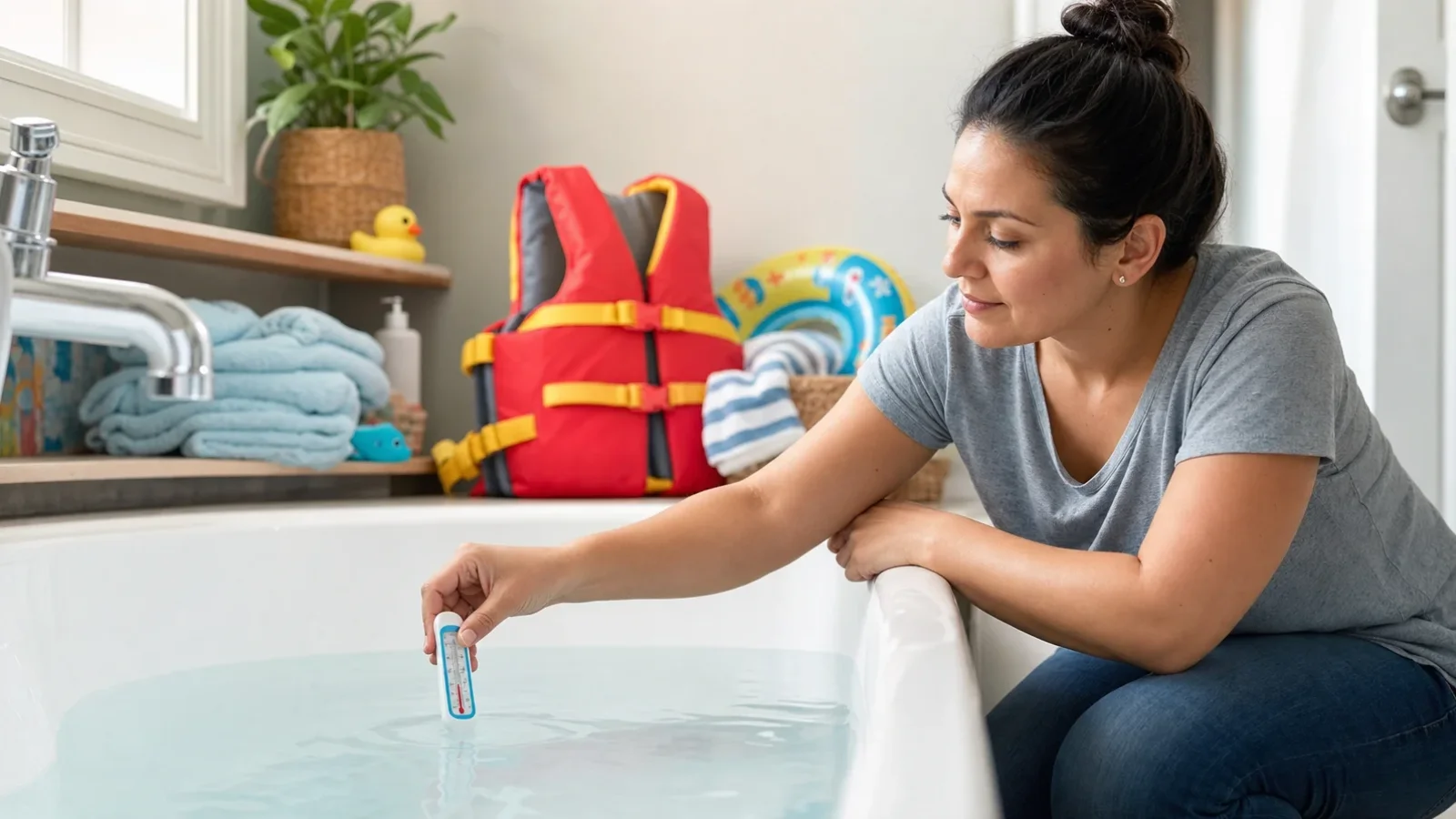
Water can be one of the most enjoyable parts of childhood.
Young children may love:
- Bath time
- Splash pads
- Swimming pools
- Beaches
- Lakes
- Boats
- Water tables
- Backyard sprinklers
Water also creates serious risk.
Babies, toddlers, and preschoolers:
- Move quickly
- Explore without understanding danger
- May be unable to call for help
- Can lose balance easily
- May not recognize changes in water depth
- Can become silent when struggling
- May return to water after adults believe playtime is over
Water safety works best as a layered system.
Those layers include:
- Active supervision
- Barriers
- Swimming and water-safety skills
- Life jackets
- Safe routines
- Emergency readiness
No single layer is enough.
Why Water Safety Matters
The CDC identifies drowning as the leading cause of death for children ages 1 through 4.
For young children, common risk settings include:
- Home swimming pools
- Hot tubs
- Bathtubs
- Buckets
- Toilets
- Ponds
- Lakes
- Canals
- Ditches
- Beaches
- Wading pools
- Water features
Children do not need to be participating in a planned swimming activity to face risk.
A toddler may gain unexpected access through:
- An unlocked door
- An open gate
- A pet door
- A removable pool ladder
- A neighbor’s yard
- A bathtub left filled
- A bucket left outdoors
This is why water safety must continue even when no one plans to swim.
Active Adult Supervision
Stay Close Enough to Act
For babies, toddlers, and weak swimmers, the supervising adult should remain within immediate reach.
This is often called touch supervision.
The adult should be close enough to:
- Support the child immediately
- Prevent slipping
- Stop climbing
- Respond to choking or distress
- Remove the child from danger
Watching from:
- A chair across the pool
- Inside the house
- A window
- A phone screen
- A nearby table
is not active supervision.
Give One Adult the Job
At gatherings, adults may assume someone else is watching.
Prevent this by naming one responsible water watcher.
That person should:
- Know they are responsible
- Remain sober
- Avoid phone use
- Avoid reading
- Avoid conversations that divide attention
- Stay near the water
- Transfer responsibility clearly before leaving
Use direct language:
You are the water watcher until 2:30. Then I will take over.
Do not rely on vague statements such as:
We are all watching.
Lifeguards Do Not Replace Parents
Lifeguards are an important safety layer.
They may be responsible for:
- Many swimmers
- A large area
- Multiple hazards
- Facility rules
- Emergencies involving other people
Parents and caregivers must still supervise their own children closely.
Avoid Distractions
Common distractions include:
- Texting
- Social media
- Work calls
- Alcohol
- Food preparation
- Talking with guests
- Caring for another child
- Reading
- Headphones
- Leaving to get towels
Prepare supplies before water play:
- Towels
- Diapers
- Sunscreen
- Snacks
- Water
- Life jackets
If you must leave, take the child with you.
Swimming Lessons and Realistic Expectations
Swimming lessons can help children develop water skills.
Instruction may include:
- Entering water safely
- Returning to the surface
- Turning
- Floating
- Moving toward an exit
- Following pool rules
- Calling for help
Lessons should be:
- Age appropriate
- Taught by qualified instructors
- Matched to the child’s development
- Conducted in a safe environment
Lessons Do Not Make a Child Drown-Proof
A child who performs a skill during a lesson may not be able to repeat it when:
- Fully clothed
- Frightened
- Injured
- Tired
- In cold water
- In waves or currents
- Alone
- Falling unexpectedly
Children who have completed lessons still need:
- Supervision
- Barriers
- Life jackets where appropriate
- Safe rules
- Adult emergency readiness
Avoid programs that promise to make an infant or toddler:
- Drown-proof
- Completely water safe
- Able to self-rescue in every situation
No young child should be treated as independent around water.
Choosing a Swim Program
Ask:
- What credentials do instructors hold?
- What ages do they teach?
- How are classes supervised?
- What is the class size?
- Are parents in the water?
- What emergency equipment is available?
- How is the water maintained?
- How does the program respond to a frightened child?
- Are skills taught gradually?
- What does the program tell parents about supervision?
Observe a class before enrolling when possible.
Pool Safety at Home
Home pools require several independent protections.
Install a Four-Sided Barrier
A pool barrier should separate the water from the house and yard.
A four-sided fence is safer than relying on the house as one side of the barrier.
The barrier should include:
- Self-closing gate
- Self-latching gate
- Child-resistant latch
- No easy climbing points
- No furniture positioned beside it
Confirm current local building requirements.
Keep the Gate Closed
A safety gate is only effective when:
- It closes completely
- The latch works
- It is never propped open
- Adults do not leave objects blocking it
Test the gate regularly.
Secure Doors and Windows
Doors leading toward the pool may need:
- High locks
- Door alarms
- Self-closing hardware
- Child-resistant latches
Windows that permit access may also need protection.
Remove Climbing Aids
Move away:
- Chairs
- Tables
- Planters
- Toys
- Storage containers
- Pool equipment
Anything near the fence may become a step.
Above-Ground Pools
Above-ground pools also require barriers.
After swimming:
- Remove or secure ladders
- Lock access
- Remove toys
- Restore barriers
- Check covers
- Prevent climbing on straps or supports
Do not assume high walls prevent access.
Pool Covers and Alarms
Pool covers and alarms may add protection.
They do not replace:
- Fencing
- Locked access
- Supervision
A cover must be designed for safety and used correctly.
A floating solar cover is not a safety barrier and can create entrapment risk.
Remove Toys After Use
Toys left in or near the pool may attract a child.
After swimming:
- Remove toys
- Store them away from the water
- Reestablish every barrier
- Check the gate
Bathtub Safety
Bathtubs are a major water hazard for babies and toddlers.
Stay Within Reach
Never leave a young child alone in the bath.
Do not leave to:
- Answer the phone
- Get a towel
- Check cooking
- Open the door
- Care for another child
Take the child with you if you must leave.
Do Not Rely on Bath Seats
Bath seats and rings can tip, trap, or create false confidence.
They do not replace hands-on supervision.
Prepare First
Before placing the child in the bath, gather:
- Soap
- Washcloth
- Towel
- Clean diaper
- Clothing
- Bath toys
Keep everything within reach.
Empty the Tub Immediately
After bathing:
- Drain the water
- Remove toys
- Secure the bathroom
- Store the drain plug if needed
- Prevent unsupervised access
Watch Other Containers
Young children can fall headfirst into containers.
Empty and store:
- Buckets
- Coolers
- Large tubs
- Mop pails
- Pet water containers when practical
- Wading pools
Keep toilet lids closed and consider child-resistant locks when appropriate.
Lakes, Beaches, and Boating
Natural water is different from a swimming pool.
Risks may include:
- Currents
- Waves
- Drop-offs
- Cold water
- Murky water
- Rocks
- Boat traffic
- Changing weather
- Plants
- Uneven surfaces
- Limited visibility
Stay Within Reach
Young children should remain close to an attentive adult.
A child may step from shallow water into a sudden drop-off.
Choose Designated Areas
Use beaches or swimming areas with:
- Lifeguards when available
- Posted rules
- Water-quality information
- Defined swimming zones
- Safe entry areas
Follow closure warnings.
Check Conditions
Before entering, review:
- Weather
- Lightning
- Rip-current warnings
- Water temperature
- Waves
- Local advisories
- Boat traffic
Leave the water when conditions become unsafe.
Boating
Children should wear an appropriate life jacket while boating.
Before departure:
- Check fit
- Secure straps
- Confirm required approval labels
- Review state requirements
- Carry correctly sized jackets for everyone
- Explain where children sit
- Maintain adult supervision
A life jacket stored under a seat cannot help a child who falls overboard unexpectedly.
Life Jackets and Flotation Devices
Use the Right Device
A child’s life jacket should be:
- Designed for the child’s weight
- Properly fitted
- Fully fastened
- In good condition
- Appropriate for the activity
- Approved as required
Adult-sized life jackets may not keep a child secure.
Check the Fit
After fastening:
- Lift gently at the shoulders
- Confirm the jacket does not rise over the chin or face
- Make sure straps are snug
- Use the crotch strap when included
- Follow the manufacturer’s directions
Flotation Toys Are Not Life Jackets
Do not treat these as safety devices:
- Water wings
- Inflatable rings
- Pool noodles
- Rafts
- Swim vests without appropriate approval
- Inflatable toys
They may:
- Deflate
- Slip off
- Tip
- Trap a child
- Drift away
Life Jackets Do Not Replace Supervision
A child wearing a life jacket still needs an attentive adult.
Life jackets are one layer.
Emergency Preparedness and CPR
Adults responsible for young children should consider learning:
- CPR
- Rescue breathing
- First aid
- Choking response
- Safe water rescue
Use recognized training with hands-on practice when possible.
Keep Emergency Equipment Available
Near a home pool, consider:
- Phone
- Rescue hook
- Ring buoy
- First-aid kit
- Posted address
- Emergency numbers
Equipment should be accessible to adults but not create hazards for children.
Know the Address
Babysitters and visitors should know:
- Exact street address
- Apartment or unit
- Gate code
- Best entrance
- Emergency contact
Post it near the phone.
If a Child Is Missing
Check water first:
- Pool
- Spa
- Pond
- Bathtub
- Neighbor’s pool
- Canal
- Fountain
Seconds matter.
If a Child Is Found in Water
- Remove the child safely.
- Call emergency services.
- Begin CPR if the child is not breathing normally.
- Follow dispatcher instructions.
- Continue until trained help takes over.
A child who appears to recover after a water incident still needs medical evaluation.
Teaching Children Safe Water Habits
Young children cannot be responsible for their own safety.
Still, repeated rules can build habits.
Teach:
- Ask before going near water
- Wait for an adult
- Walk near pools
- Enter feet first unless a safe diving area is clearly designated
- Stay with the adult
- Wear a life jacket when instructed
- Never push another child
- Do not hold someone underwater
- Get out when the adult says
- Call for help instead of attempting a rescue
Teach “Reach or Throw, Don’t Go”
A child who sees someone struggling should:
- Call an adult
- Reach with a long object
- Throw a floating object
- Avoid entering the water
Young children should not attempt a rescue.
Practice Rules Away From Water
Use:
- Picture books
- Pretend play
- Simple demonstrations
- Repeated phrases
- Family safety rules
Keep the message calm.
Fear-based teaching may make a child panic without improving safety.
Water Safety at Child Care
Parents should ask providers:
- Are water activities offered?
- Is there a pool?
- Are wading pools used?
- Are sprinklers or splash pads used?
- What supervision ratio applies?
- Is written permission required?
- Are staff trained in CPR?
- Are lifeguards present?
- How are children counted?
- How is access blocked when water is not in use?
- Are life jackets used?
- How are emergencies handled?
Providers should follow applicable:
- Licensing requirements
- Staff ratios
- Permission rules
- Training requirements
- Pool regulations
- Transportation rules
Special Considerations for Babies
Babies require hands-on support around every water source.
Key precautions include:
- Keep one hand on the baby in the bath
- Use a stable bathing area
- Check water temperature
- Keep supplies within reach
- Empty water immediately
- Secure pools, toilets, buckets, and pet water
- Avoid relying on infant flotation devices
- Maintain shade and temperature awareness outdoors
An infant’s familiarity with water should never be interpreted as swimming ability.
Special Considerations for Toddlers
Toddlers are fast, curious, and persistent.
Focus on:
- Door locks
- Gate alarms
- Four-sided fencing
- Empty containers
- Direct supervision
- Repeated rules
- Secure above-ground pool ladders
- Checking nearby properties for water
- Teaching caregivers the safety plan
Toddlers may return to the pool after everyone believes swimming is finished.
Special Considerations for Preschoolers
Preschoolers may:
- Overestimate their ability
- Copy older children
- Remove life jackets
- Jump without checking depth
- Enter water to retrieve a toy
- Attempt to help a friend
Continue supervision even when a preschooler:
- Has taken lessons
- Can float
- Can cross a pool
- Is confident in water
Confidence is not the same as judgment.
Common Water Safety Mistakes
Avoid:
- Leaving a child “for one minute”
- Asking an older sibling to supervise
- Relying on lifeguards alone
- Assuming lessons prevent drowning
- Using water wings as life jackets
- Leaving toys in the pool
- Propping open a gate
- Leaving a ladder attached
- Drinking alcohol while supervising
- Looking at a phone
- Assuming drowning will be loud
- Ignoring tubs, buckets, and ponds
- Failing to teach babysitters the safety plan
Frequently Asked Questions
At what age should a child start swimming lessons?
Readiness varies. Parents can discuss age-appropriate lessons with the child’s health care provider and qualified swim instructors. Lessons should complement—not replace—supervision and barriers.
Can a baby learn to self-rescue?
Some programs teach water responses, but no infant or young child should be considered drown-proof or safe without close adult supervision.
Are water wings safe?
Inflatable water wings are toys, not substitutes for properly fitted life jackets or adult supervision.
Is a lifeguard enough supervision?
No. Parents and caregivers should actively supervise their own young children even when a lifeguard is present.
How much water can be dangerous to a toddler?
Even shallow water in tubs, buckets, toilets, wading pools, and landscape features can be hazardous.
Should children wear life jackets at a swimming pool?
Young children and weak swimmers may benefit from appropriately fitted life jackets, especially around large or unfamiliar pools. Supervision remains necessary.
What kind of fence should a home pool have?
A four-sided barrier separating the pool from the home and yard, with a self-closing and self-latching gate, is an important protective layer. Follow current local requirements.
What should I do if my child briefly went underwater?
Remove the child, assess breathing, call emergency services when indicated, and seek medical guidance. Symptoms can appear after the incident.
Related Resources
No related-resource inventory was supplied with this article. Future internal links should prioritize:
- Understanding common playground risks
- Home daycare safety
- Child care provider emergency planning
- Pediatric CPR and first-aid certification
- Choosing a quality child care provider
- Summer activities and camps
Sources
- CDC: Drowning Prevention
- CDC: Preventing Drowning
- CDC: Summer Swim Safety
- CDC: Risk Factors for Drowning
- HealthyChildren.org: Drowning Prevention for Curious Toddlers
- HealthyChildren.org: Water Safety Tips for Kids of All Ages
- HealthyChildren.org: Life Jackets and Life Preservers for Children
- CPSC: Pool Safely
- CPSC: In-Home Drowning Safety Information
- U.S. Coast Guard: Life Jacket Wear
- American Red Cross: CPR Training
ChildCareCenter.us is an independent directory and educational resource. Pool barriers, child care licensing, staff ratios, boating laws, life-jacket requirements, swim instruction, and emergency procedures vary by location and may change. This article is not medical, legal, rescue, licensing, or professional water-safety advice. Follow current official guidance and consult qualified health care, aquatic-safety, boating, and emergency-response professionals.