
Teaching Children to Recognize Manipulation and Stay Safe
14 min read
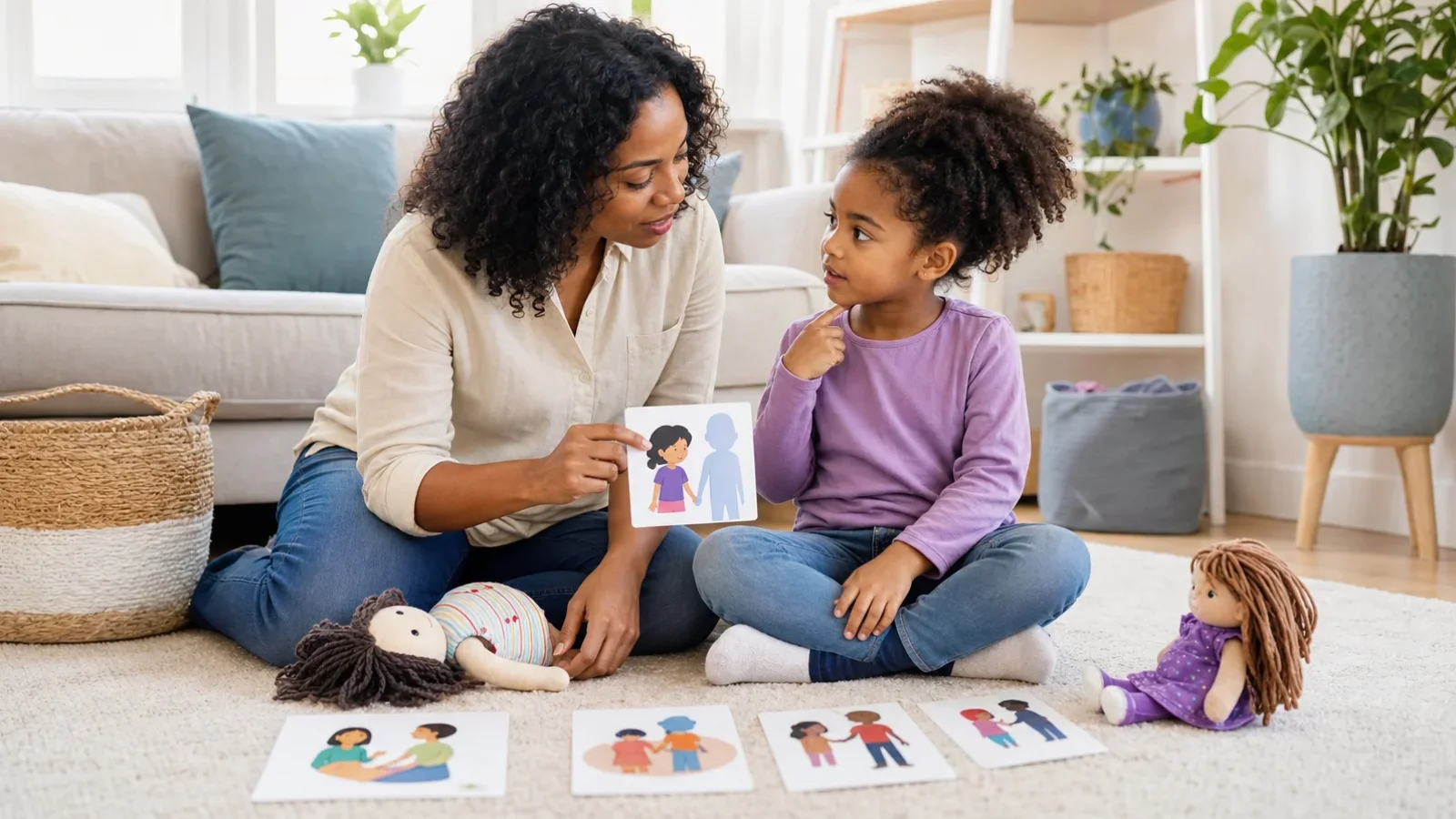
Parents often teach children about obvious dangers.
They may say:
- Do not go with a stranger.
- Do not share your address online.
- Ask before leaving with someone.
- Tell an adult if you feel unsafe.
Those rules matter, but manipulation is often less obvious.
A person who wants to exploit a child may appear:
- Friendly
- Helpful
- Generous
- Popular
- Protective
- Understanding
- Similar in age
- Trusted by the family
- Important in the community
Manipulation can come from:
- An adult
- An older child
- A peer
- A coach
- A relative
- A family friend
- A babysitter
- A teacher
- Someone met online
- Someone pretending to be another person
Children need more than a warning about strangers.
They need language for recognizing pressure, secrecy, guilt, threats, boundary violations, and relationships that do not feel safe.
Why Children Are Vulnerable to Manipulation
Children are still developing:
- Judgment
- Impulse control
- Understanding of risk
- Ability to predict consequences
- Confidence in challenging authority
- Language for uncomfortable experiences
- Knowledge of adult motives
They are often taught to:
- Obey adults
- Be polite
- Keep promises
- Avoid getting someone in trouble
- Respect older children
- Do what coaches or teachers say
These lessons can be used against them.
A manipulative person may say:
- Your parents said it was okay.
- You are so mature for your age.
- This is our special secret.
- I bought this for you, so you owe me.
- No one else understands you.
- You started it.
- Your family will be angry.
- I will get in trouble if you tell.
- Everyone will see this picture.
- I will hurt you or someone you love.
- No one will believe you.
Children may comply because they:
- Trust the person
- Feel embarrassed
- Fear punishment
- Want approval
- Believe they caused the situation
- Do not know how to leave
- Think the threat is real
- Worry about losing friends
- Do not want to upset the family
Build Open Communication
The best safety plan begins before a problem occurs.
Children are more likely to disclose concerns when adults regularly:
- Listen
- Stay calm
- Take feelings seriously
- Admit mistakes
- Avoid harsh punishment
- Answer questions honestly
- Respect reasonable boundaries
- Show that difficult topics are welcome
Make a No-Trouble Promise
Tell the child:
You can always tell me when someone scares, pressures, threatens, touches, tricks, or confuses you. You will not be in trouble for telling me.
This promise is especially important for online situations.
A child may delay asking for help because they:
- Used an app without permission
- Talked to a stranger
- Shared personal information
- Sent an image
- Lied about age
- Broke a device rule
The child still needs immediate help.
Consequences for a broken household rule should never become more important than safety.
Practice Everyday Listening
Open communication grows through ordinary conversations.
Ask:
- What felt good today?
- Did anything feel uncomfortable?
- Did anyone ask you to keep a secret?
- Did anyone make you feel like you owed them something?
- Did someone ignore your “no”?
- Did anything online confuse or scare you?
Do not interrogate.
Leave room for:
- Silence
- Drawing
- Play
- Writing
- Later conversation
Teach Body Autonomy
Body-safety education should be clear and age appropriate.
Teach children:
- Their body belongs to them.
- They can refuse unwanted affection.
- They do not have to hug or kiss someone to be polite.
- Private parts are private.
- Caregiving or medical help should be explained.
- They can tell a trusted adult about uncomfortable touch.
- They may tell even if the person said not to.
- They may tell even if they initially agreed.
- They may keep telling until someone helps.
Use accurate names for body parts.
Clear language helps children:
- Understand boundaries
- Ask questions
- Report concerns
- Communicate with health professionals
Do Not Make Children Responsible for Stopping Abuse
Children can learn:
- Say no
- Move away
- Get help
- Tell an adult
But a child may:
- Freeze
- Comply
- Become confused
- Be unable to leave
- Fear retaliation
Not resisting does not mean consent or responsibility.
Safe Surprises Versus Unsafe Secrets
A blanket rule that children should never keep any secret can be confusing.
Families can distinguish between:
Safe surprise
A safe surprise:
- Is temporary
- Will be revealed soon
- Makes people feel happy
- Does not involve harm or fear
Example:
We are making a birthday card for Grandma. We will give it to her Saturday.
Unsafe secret
An unsafe secret may:
- Have no end date
- Make the child afraid
- Involve touching or images
- Include gifts or threats
- Protect someone from consequences
- Require hiding from parents
- Make the child feel trapped
Examples:
- Do not tell your parent I messaged you.
- This is our private game.
- You will ruin the family if you tell.
- I will post your photo if you stop talking to me.
- Your coach will be angry if you mention this.
Teach:
A safe adult will not ask a child to hide a relationship, touch, image, threat, gift, or unsafe behavior from the people who care for the child.
Recognizing Manipulative Behavior
Manipulation often develops gradually.
A person may test small boundaries before making a larger demand.
Excessive attention
The person may:
- Give unusual praise
- Make the child feel specially chosen
- Create private communication
- Spend more time with one child
- Act like the only person who understands
Attention is not automatically unsafe.
Concern grows when attention is combined with:
- Secrecy
- Isolation
- Gifts
- Boundary violations
- Pressure
Gifts and favors
A person may give:
- Money
- Food
- Game credits
- Clothing
- Devices
- Rides
- Special privileges
Then say:
- You owe me.
- Do not tell your parents.
- I did this for you.
- You will hurt me if you refuse.
Teach children that a gift never creates an obligation to:
- Keep a secret
- Provide affection
- Share an image
- Meet privately
- Break a rule
- Allow touching
Guilt
Examples include:
- I thought you cared about me.
- You are being mean.
- I will be lonely if you leave.
- You made me do this.
- You are ruining everything.
Healthy relationships allow people to say no without punishment.
Threats
Threats may involve:
- Physical harm
- Family harm
- Exposure
- Embarrassment
- Loss of friendship
- Getting the child in trouble
- Sharing images
- False accusations
Tell children not to negotiate alone.
The correct response is to seek adult help.
Isolation
A manipulative person may try to separate the child from:
- Parents
- Friends
- Teachers
- Other caregivers
- Group activities
They may say:
- Your parents do not understand.
- Your friends are jealous.
- Do not tell anyone about us.
- We should meet alone.
Moving boundaries slowly
A person may begin with:
- Innocent messages
- Jokes
- Compliments
- Small rule-breaking
- Personal questions
Then move toward:
- Sexual conversation
- Private meetings
- Images
- Threats
- Requests for money
- Harmful dares
Teach children that they may end a conversation at any time, even if it started normally.
A Simple Safety Test
Teach children to pause when someone asks them to do something that involves:
- Secrecy
- Pressure
- Threats
- Guilt
- Isolation
- Private images
- Breaking family safety rules
A child-friendly phrase might be:
Stop, leave, save, and tell.
- Stop responding.
- Leave the situation or conversation.
- Save evidence when safe.
- Tell a trusted adult.
Online Safety Basics
Online manipulation can occur through:
- Social media
- Messaging apps
- Online games
- Gaming consoles
- Livestreams
- Video platforms
- Group chats
- Shared documents
- School platforms
A person may pretend to be:
- A child
- A friend
- A romantic interest
- A talent scout
- A gamer
- A classmate
- A helpful adult
Protect personal information
Teach children not to share without parent permission:
- Full name
- Home address
- School
- Phone number
- Passwords
- Live location
- Daily schedule
- Travel plans
- Private photos
- Identification documents
Even small facts can be combined.
Online friends are still unknown people
A child may feel they know someone after weeks of:
- Gaming
- Messaging
- Video chatting
- Sharing interests
Online identity can be false.
Children should not:
- Meet alone
- Move conversations to secret apps
- Accept rides
- Send private images
- Share passwords
- Send money
- Follow instructions to hide activity
Private images
Teach children:
- Never pressure someone for an image.
- Never forward another child’s private image.
- Tell an adult if someone requests one.
- Get help if an image has already been sent.
- Do not pay or send more material in response to threats.
A child who has shared an image needs support, not shame.
Use parental controls as one layer
Parental controls may help with:
- App downloads
- Purchases
- Content
- Contacts
- Screen time
- Location sharing
They cannot replace:
- Conversation
- Supervision
- Privacy education
- A trusted-adult plan
Children may encounter manipulation on a permitted platform or through someone they already know.
Help Children Identify Trusted Adults
A trusted adult is not simply someone with a respected title.
A trusted adult:
- Listens
- Believes concerns
- Respects boundaries
- Seeks help
- Does not demand unsafe secrecy
- Does not retaliate
- Does not blame the child
Help the child identify at least three possibilities, such as:
- Parent
- Grandparent
- Teacher
- School counselor
- Relative
- Coach
- Child care provider
- Neighbor
- Health professional
Include adults in different settings.
Teach persistence
Tell the child:
If one adult does not understand or help, tell another adult. Keep telling until someone helps.
A first disclosure may be:
- Indirect
- Incomplete
- Mixed with denial
- Presented as a joke
- About “a friend”
- Revealed slowly
Adults should pay attention.
Practice Safety Scenarios
Practice can help children respond under pressure.
Keep scenarios short and calm.
Scenario 1: Gift and secrecy
An adult gives you an expensive gift and says not to tell your parent.
Practice:
- Do not promise secrecy
- Leave
- Tell a trusted adult
Scenario 2: Online pressure
Someone in a game asks for a private photo and promises game credits.
Practice:
- Do not send
- Block or stop responding
- Save the username
- Tell an adult
Scenario 3: Threat
Someone says they will tell a lie about you if you do not obey.
Practice:
- Do not handle the threat alone
- Move to safety
- Tell an adult
Scenario 4: Authority
A coach says a private activity is required but no other adults may know.
Practice:
- Ask to involve the parent
- Refuse private secrecy
- Tell another trusted adult
Scenario 5: Friend pressure
A friend says you cannot be part of the group unless you break a rule.
Practice:
- Say no
- Leave
- Find a safe peer or adult
Useful phrases
Children can practice:
- No.
- I need to ask my parent.
- I do not keep secrets about safety.
- Stop messaging me.
- I am leaving now.
- I need help.
- I want another adult here.
- I changed my mind.
Children do not need to be polite when leaving an unsafe situation.
What Parents Should Do When a Child Reports a Concern
Stay calm
Strong visible reactions may cause the child to:
- Stop talking
- Protect the offender
- Feel responsible
- Fear punishment
- Change the account
Take a breath.
Use a calm voice.
Believe and support
Say:
- I am glad you told me.
- This is not your fault.
- You are not in trouble.
- I believe you.
- I will help you.
- You do not have to handle this alone.
Do not ask:
- Why did you let this happen?
- Why did you send it?
- Why did you not tell sooner?
- Are you sure?
- What were you thinking?
Let the child use their own words
Ask minimal, open questions needed for immediate safety:
- Tell me what happened.
- What happened next?
- Are you safe right now?
- Is anyone else in danger?
- Where did this happen?
Avoid repeated or leading questioning.
Detailed interviewing should be left to trained professionals when abuse or exploitation may have occurred.
Protect immediate safety
Depending on the situation:
- Separate the child from the person
- Stop unsupervised access
- Block online contact
- Change passwords
- Secure accounts
- Contact emergency services for immediate danger
- Obtain medical care when needed
Do not confront a suspected offender in a way that increases risk or destroys evidence.
Preserve evidence
For online incidents, preserve available:
- Usernames
- URLs
- Messages
- Dates
- Payment demands
- Account information
- Screenshots
Do not forward or distribute sexual images of a minor.
Follow law-enforcement or NCMEC guidance about preservation and reporting.
Report concerns
Immediate danger should be reported to emergency services.
Suspected child abuse or exploitation may need to be reported to:
- Local law enforcement
- Child protective services
- The child’s school or organization
- NCMEC CyberTipline
- FBI Internet Crime Complaint Center when appropriate
Mandatory-reporting duties vary by state and profession.
Child care providers, teachers, health professionals, and other adults may have legal reporting obligations.
Get professional support
A pediatrician or qualified mental-health professional can help assess:
- Safety
- Medical needs
- Trauma response
- Sleep
- Anxiety
- Shame
- School functioning
Do not force the child to repeatedly retell the experience to family members.
Warning Signs That Deserve Attention
Possible changes may include:
- Sudden secrecy
- Fear of a particular person
- New gifts or money
- Withdrawal
- Sleep problems
- School avoidance
- Anxiety around devices
- Deleting accounts
- Unexplained payments
- Sudden distress after notifications
- Sexual knowledge outside expected development
- Self-harm
- Threats from an online contact
- Major mood changes
These signs do not prove manipulation or abuse.
They are reasons to:
- Check in
- Listen
- Review safety
- Seek professional help when needed
Avoid Fear-Based Safety Teaching
Safety education should empower children, not make them believe everyone is dangerous.
Avoid messages such as:
- Never trust anyone.
- Bad people look scary.
- Only strangers hurt children.
- You must fight back.
- If you break a rule, something terrible will happen.
Use balanced messages:
- Most people want children to be safe.
- Unsafe behavior can come from someone known or unknown.
- You can ask for help.
- You can change your mind.
- You will not be blamed for someone else’s manipulation.
- Adults are responsible for protecting children.
Safety in Child Care and Youth Programs
Parents can ask organizations:
- Are staff background checks required?
- Is one-on-one private messaging allowed?
- Can adults transport children alone?
- What are bathroom and changing procedures?
- Are doors kept observable?
- Are visitors logged?
- How are allegations handled?
- Who receives reports?
- Are staff mandatory reporters?
- Are overnight trips regulated?
- Are adults permitted to give private gifts?
- Can staff connect with children through personal social media?
Strong policies reduce opportunities for secrecy and isolation.
Age-Appropriate Teaching
Preschool-age children
Teach:
- Body ownership
- Correct body-part names
- Safe and unsafe secrets
- Ask before going somewhere
- Tell a trusted adult
- No forced affection
School-age children
Add:
- Manipulative gifts
- Guilt
- Threats
- Online identity
- Private messages
- Privacy
- Trusted-adult network
- Practice scenarios
Older children and teens
Discuss:
- Grooming
- Dating pressure
- Image sharing
- Sextortion
- Financial threats
- Fake accounts
- Location sharing
- Consent
- Healthy relationships
- Reporting and evidence
Continue the no-punishment-for-disclosure promise.
Frequently Asked Questions
What is manipulation?
Manipulation is an attempt to control another person through deception, guilt, pressure, threats, secrecy, rewards, isolation, or misuse of trust or authority.
How young should safety conversations begin?
Parents can begin simple body-boundary and trusted-adult conversations as soon as children can communicate, then add detail as they grow.
Should children be told never to keep secrets?
It may be clearer to distinguish temporary happy surprises from secrets involving fear, touching, threats, images, gifts, or unsafe behavior.
What if the manipulative person is another child?
Take the concern seriously. Protect everyone’s safety, involve responsible adults, and seek professional guidance rather than dismissing the behavior as ordinary play.
What if my child sent a private image?
Stay calm, reassure the child, stop contact, preserve available evidence without redistributing the image, and report threats or exploitation. Do not pay or blame the child.
Should parents secretly monitor every message?
Age-appropriate supervision and parental controls can help, but secret surveillance may damage trust. Explain monitoring rules and keep communication open whenever safety allows.
What should a child do when threatened online?
Stop responding, do not pay or send more material, save identifying information when safe, block the account as appropriate, and tell a trusted adult immediately.
What if the first adult does not believe the child?
The child should tell another trusted adult and keep telling until someone acts to protect them.
Related Resources
No related-resource inventory was supplied with this article. Future internal links should prioritize:
- Reporting child abuse and neglect
- Reporting child care violations
- Background checks
- Child care provider safety
- Online safety for children
- Choosing a quality child care provider
- Signs that a child may be unsafe
Sources
- HealthyChildren.org: Preventing Child Sexual Abuse—What Parents Need to Know
- HealthyChildren.org: Preventing Abuse in Youth Sports and Organized Activities
- HealthyChildren.org: Sexual Behaviors in Young Children
- NCMEC: Online Enticement
- NCMEC NetSmartz: Resources
- NCMEC: Into the Cloud
- NCMEC: CyberTipline
- FBI: Sextortion
- FBI: Financially Motivated Sextortion
- FBI: Internet Crime Complaint Center
- FTC: Protecting Kids Online
- FTC: Protecting Your Child’s Privacy Online
- Child Welfare Information Gateway: How to Report Child Abuse and Neglect
ChildCareCenter.us is an independent directory and educational resource. Child-protection laws, mandatory-reporting duties, online-platform procedures, school policies, and investigative practices vary by jurisdiction and may change. This article is not legal, medical, mental-health, investigative, or emergency advice. Contact emergency services for immediate danger and use official child-protection, law-enforcement, medical, and mental-health resources when needed.