
10 Signs of a Daycare with a Great Preschool Program
13 min read
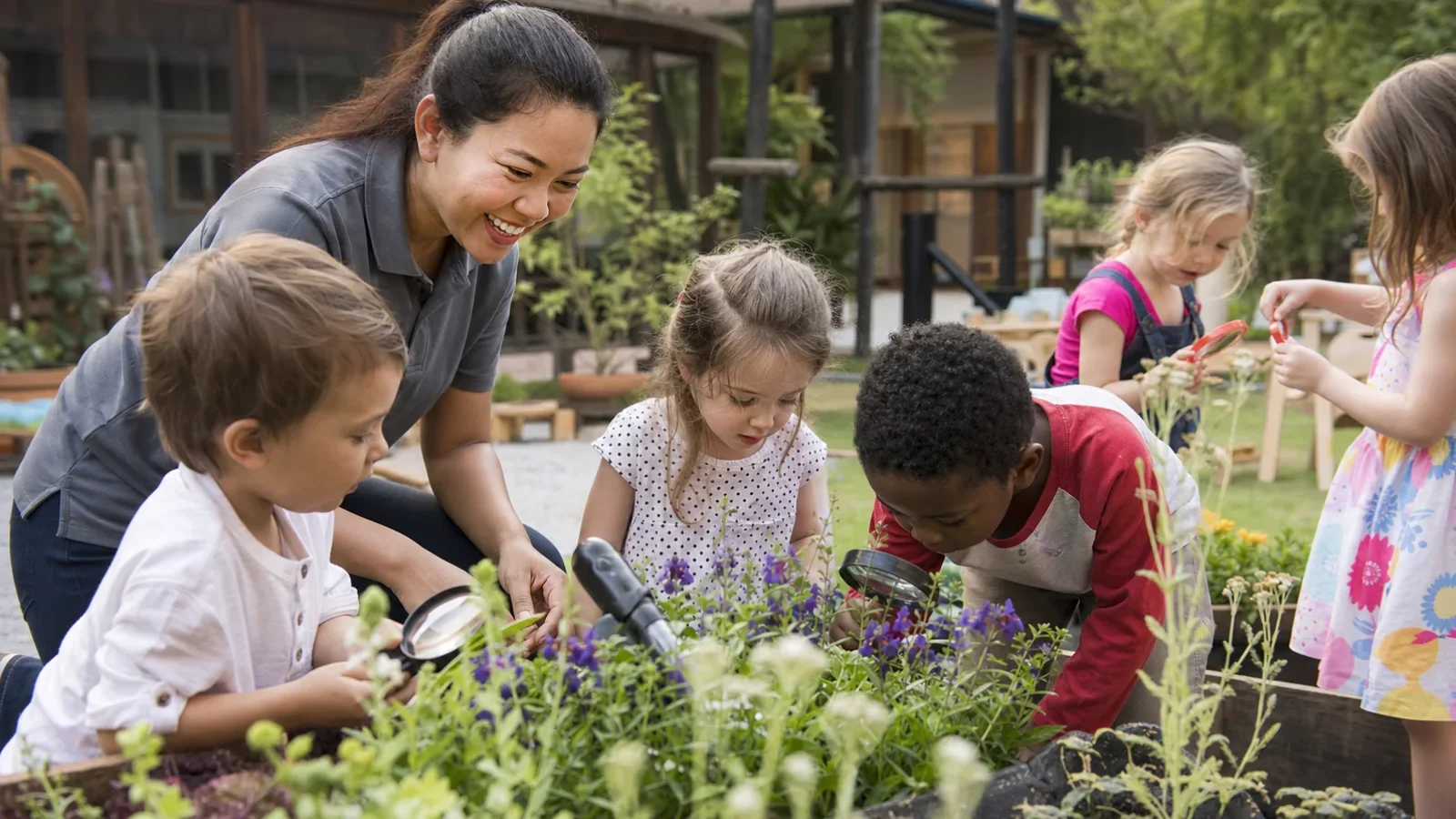
A daycare that includes a preschool program can be a practical choice for working families. Children may receive full-day care, siblings may attend one location, and parents may avoid combining a short preschool schedule with separate before- or after-care.
Convenience, however, does not guarantee a strong preschool experience.
A quality preschool program should help children feel safe, form trusting relationships, build language and social skills, move their bodies, explore ideas, and become more independent. It should prepare children for kindergarten without turning the preschool day into a smaller version of elementary school.
The best signs are usually visible during ordinary moments: teachers listen to children, materials invite exploration, transitions are manageable, and children are actively involved rather than spending long periods waiting or watching screens.
Use these ten signs to evaluate a daycare preschool program during tours and after enrollment.
1. Teachers Build Warm, Responsive Relationships
Strong early learning begins with relationships. Preschoolers are more likely to explore, participate, and practice new skills when they trust the adults caring for them.
Good signs
Teachers:
- Greet children by name
- Get down to children’s eye level
- Listen to their ideas and questions
- Respond calmly to frustration or tears
- Help children enter play
- Notice when a child is tired, overwhelmed, or left out
- Use encouragement without constant rewards
- Explain limits respectfully
- Know each child’s interests and needs
- Include children from different cultures, languages, abilities, and family structures
Children should generally feel comfortable approaching teachers. They may still have difficult moments, but adults help them recover without humiliation or fear.
Warning signs
Be cautious when teachers:
- Yell, threaten, mock, or shame
- Label children as “bad” or “a problem”
- Ignore repeated requests for help
- Handle children roughly
- Show obvious favoritism
- Spend long periods on personal phones
- Talk about children negatively within their hearing
- Expect preschoolers to manage strong emotions without support
A polished curriculum cannot make up for cold, harsh, or inconsistent caregiving.
2. Learning Happens Through Purposeful Play
Preschoolers learn through play, conversation, movement, repetition, experimentation, and relationships. A strong program uses these experiences intentionally.
Look for classroom areas that support:
- Pretend play
- Building and construction
- Books and storytelling
- Art and creative materials
- Early math and sorting
- Science and nature exploration
- Music and movement
- Sensory play
- Puzzles and problem-solving
- Writing and drawing
The materials should be within children’s reach and used regularly rather than displayed only for tours.
Teachers may plan themes or guided activities, but children should also have time to make choices, develop ideas, and stay with an activity long enough to explore it.
Good signs
- Teachers ask open-ended questions
- Children use materials in different ways
- Activities allow more than one correct result
- Teachers add vocabulary during play
- Children work alone, in pairs, and in groups
- Projects reflect children’s own effort
- Teachers follow children’s questions and interests
- Learning connects with everyday routines
Warning signs
- Worksheets dominate the day
- Every art project looks identical
- Teachers complete work for children
- Children spend long periods copying letters
- Materials remain stored where children cannot use them
- Most activities require one “right” product
- Children are frequently corrected for experimenting
Play-based learning is not unstructured babysitting. In a strong program, teachers prepare the environment, observe children, introduce ideas, and extend learning without controlling every step.
3. Language and Early Literacy Are Part of the Whole Day
Preschool literacy includes more than recognizing letters. Children build reading readiness through conversation, vocabulary, storytelling, listening, rhyme, print awareness, and meaningful opportunities to draw and write.
Look for:
- Teachers reading aloud every day
- Books available throughout the room
- Conversations during meals, play, and transitions
- Songs, rhymes, and word games
- Children retelling stories
- Labels and print used for real purposes
- Drawing and writing materials
- Teachers writing down children’s words
- Support for children learning more than one language
A strong program may introduce letter names and sounds, but it should not pressure every child to read before kindergarten.
Ask:
- How do teachers support children at different skill levels?
- How are books selected?
- Do children hear stories that reflect varied families and cultures?
- How does the program support a child’s home language?
- How are speech or language concerns discussed with families?
Warning signs
- Memorization replaces conversation and storytelling
- Children are compared publicly
- Reading instruction is identical for every child
- Home languages are discouraged
- Teachers correct every grammar mistake instead of encouraging communication
- Books are rarely used outside a scheduled lesson
The goal is to help children see language and books as useful, enjoyable, and connected to their lives.
4. Teachers Support Social-Emotional Skills
Preschoolers are still learning how to wait, share space, enter play, handle disappointment, use words during conflict, and understand other people’s feelings.
A quality program teaches these skills rather than treating every mistake as misbehavior.
Good signs
Teachers:
- Help children name feelings
- Model calm problem-solving
- Teach words for joining play
- Guide children through conflicts
- Offer limited choices
- Redirect before behavior escalates
- Help children repair harm
- Adjust the environment when problems repeat
- Communicate with families about patterns
- Protect the privacy of every child involved
Ask how the program handles biting, hitting, tantrums, exclusion from play, running away, toileting accidents, repeated disruption, and behavior connected to disability or communication needs.
Warning signs
- Physical punishment
- Humiliation or threats
- Public behavior charts that shame children
- Withholding food, rest, toileting, comfort, or outdoor time
- Excessive isolation
- Forced apologies without teaching repair
- Suspension or expulsion used before supportive strategies
- Teachers discussing another child’s private information
A written discipline policy should match what you observe in the classroom.
5. Group Size and Staffing Allow Individual Attention
Preschool children may be more independent than infants, but they still need close supervision, conversation, help with conflicts, and support during routines.
Ask:
- What is the required ratio for this age group?
- What ratio does the program normally maintain?
- What is the maximum group size?
- How many children and adults are present today?
- How are breaks and absences covered?
- Are directors counted while performing office duties?
- Are classes combined at opening or closing?
- How often do children change classrooms?
- Who supervises outdoor play, meals, rest, and toileting?
Verify current ratio and group-size requirements through the state licensing agency because rules vary.
Good signs
- Staffing matches what the program describes
- Teachers know the children well
- Breaks are covered by trained adults
- Children have consistent primary teachers
- Substitutes understand routines
- Teachers can interact instead of constantly managing crowd control
- The director is visible and engaged
Warning signs
- Frequent classroom combining
- Adults counted in ratios while doing unrelated work
- Teachers unable to name children or explain their needs
- High turnover
- Children moved between groups unpredictably
- Staff appearing chronically overwhelmed
- Large parts of the day spent waiting for adult help
A long waitlist is not proof of quality. Popularity can reflect location, price, limited supply, or reputation. Evaluate the actual classroom.
6. The Schedule Balances Activity, Rest, and Choice
Preschoolers need a predictable day, but they also need flexibility.
A balanced schedule may include:
- Arrival and choice time
- Morning meeting
- Extended play
- Small-group experiences
- Outdoor play
- Meals and snacks
- Stories, music, or movement
- Rest or quiet time
- Afternoon exploration
- Calm transitions
Look at how much time children spend waiting. Repeated long lines, extended whole-group lessons, and frequent cleanup transitions can reduce meaningful play.
Ask:
- How long are teacher-led activities?
- Can children choose among activities?
- What happens if a child does not nap?
- How are children prepared for transitions?
- Is outdoor time offered daily when conditions allow?
- What happens during bad weather?
- How is the schedule adapted when children are deeply involved in play?
Good signs
- Children know what comes next
- Visual schedules support understanding
- Teachers give transition warnings
- Quiet and active periods alternate
- Children have enough time to complete ideas
- Non-nappers have a calm alternative
- The program adjusts when the group needs movement or rest
Warning signs
- Preschoolers are expected to sit still for long periods
- Children spend much of the day moving between short activities
- Rest is forced beyond reasonable quiet-time expectations
- Outdoor play is frequently removed as punishment
- The schedule looks impressive on paper but is not followed
7. Screen Use Is Limited and Purposeful
Screens should not replace conversation, active play, books, art, movement, or hands-on exploration.
Ask:
- Are televisions, tablets, or computers used?
- How often and for how long?
- For what purpose?
- Are screens used during meals or transitions?
- Can families opt out?
- How does the program choose content?
- What alternatives are available?
Good signs
- Screen use is limited
- Content is age-appropriate
- Teachers remain involved
- Media supports a specific activity rather than filling time
- Children have abundant opportunities for movement and hands-on play
- Screens are not used as the main behavior-management tool
Warning signs
- Television runs in the background
- Videos are used daily to keep children quiet
- Screen time replaces outdoor play
- Children watch without teacher interaction
- Screens are offered during most transitions
- The program describes passive media as its main curriculum
The presence of technology is not automatically a problem. The question is whether it adds something valuable or replaces richer experiences.
8. Health, Safety, and Supervision Are Built Into the Program
A great preschool program must also be a safe child care program.
During a visit, look for:
- Secured medication, chemicals, tools, and choking hazards
- Stable furniture and maintained equipment
- Accessible emergency exits
- Safe playground surfaces and fencing
- Active outdoor supervision
- Handwashing supplies
- Clean toileting and food areas
- Accurate attendance
- Consistent pickup authorization
- Drinking water
- Emergency plans
- Written illness and medication policies
Ask how the program handles fire, severe weather, lockdown, evacuation, injuries, allergies, medication, missing children, unfamiliar pickup adults, transportation, and field trips.
Warning signs
- Children outside an adult’s view
- Staff unable to state how many children are present
- Accessible hazards
- Unsecured doors or gates
- Poor handwashing
- Blocked exits
- Vague emergency procedures
- Injuries that are not documented
- Illness rules that change depending on the family
9. Teachers Observe Development Without Pressuring Children
A strong preschool program pays attention to children’s development and uses observations to plan activities and communicate with families.
Ask:
- How do teachers document learning?
- Are portfolios, notes, or work samples used?
- How often do families receive updates?
- Are conferences offered?
- How are developmental concerns discussed?
- Does the program use formal screening tools?
- How are children with disabilities supported?
- How are activities adapted?
Good signs
- Teachers describe specific strengths and interests
- Families receive concrete examples
- Development is considered across language, movement, social skills, thinking, and independence
- Concerns are discussed respectfully
- Teachers refer families to qualified professionals when appropriate
- Children are not publicly ranked
- Activities are adjusted for different needs
Warning signs
- Teachers diagnose children
- Development is judged only by worksheets or letter recognition
- Children are compared publicly
- Concerns are shared vaguely or only after a crisis
- Families are blamed
- Accommodations are promised without discussing staffing or training
- The program treats kindergarten readiness as a race
Preschool teachers can notice patterns and share observations, but medical and developmental diagnoses belong to qualified professionals.
10. Families Receive Clear, Respectful Communication
Strong programs treat families as partners while maintaining professional boundaries.
Look for:
- Daily information about activities, meals, rest, and mood
- Timely injury reports
- Clear contact information for the teacher and director
- Written policies
- Scheduled conferences
- Notice of staffing or schedule changes
- Respect for family privacy
- Clear photo and social-media permissions
- A process for questions and complaints
- Honest acknowledgement when mistakes occur
Ask:
- How will I learn about my child’s day?
- Who should I contact with a concern?
- How quickly does leadership respond?
- Will I know when the regular teacher is absent?
- May parents visit or observe?
- How are policy changes communicated?
- How are difficult conversations handled?
- Can I decline public use of my child’s image?
Warning signs
- Injuries are minimized or unexplained
- Staff and management provide conflicting accounts
- Parents are treated as difficult for asking questions
- Changes are announced at the last minute
- Private information about other children is shared
- Verbal promises contradict the contract
- Complaints disappear without follow-up
An app with photos may be convenient, but it does not replace specific conversation with someone who knows your child.
What Kindergarten Readiness Should Look Like
Families often choose preschool because they want children prepared for school. Readiness, however, is broader than knowing letters and numbers.
A balanced program supports:
- Communication and listening
- Curiosity
- Self-help skills
- Following familiar routines
- Playing with others
- Expressing needs
- Managing frustration with adult help
- Fine-motor skills
- Large-motor movement
- Early literacy
- Early math and problem-solving
- Confidence trying new tasks
Ask how the program supports children who develop skills at different rates.
Be cautious when a program promises that every child will read, write sentences, or complete formal academic work by a particular age. Strong programs challenge children without creating unnecessary pressure.
Red Flags During a Preschool Tour
Pause and investigate when:
- Licensing information cannot be verified
- Teachers speak harshly to children
- Children appear unsupervised
- Staff turnover is frequent and unexplained
- Screens occupy much of the day
- Worksheets dominate the program
- Children spend long periods waiting
- Outdoor play rarely occurs
- Teachers cannot explain the curriculum beyond academic drills
- Materials are inaccessible
- Discipline relies on shame or threats
- Emergency procedures are vague
- Injuries are not documented
- Staff dismiss developmental or accommodation needs
- Policies conflict with observed practice
- You are pressured to pay before reviewing written terms
One imperfect moment may have a reasonable explanation. A pattern of evasive answers or serious concerns should carry more weight than attractive facilities or marketing.
Frequently Asked Questions
Does a great preschool program need certified teachers?
Qualification requirements vary by state and role. Ask what education, training, and experience teachers have, what the licensing agency requires, and how the program supports ongoing professional development.
Is a waiting list a sign of high quality?
Not by itself. A waitlist may reflect demand, location, price, limited supply, or reputation. Evaluate licensing, teacher interactions, supervision, staffing, curriculum, safety, and communication directly.
Should preschoolers be reading before kindergarten?
Children develop at different rates. A strong program builds language, vocabulary, print awareness, storytelling, letter knowledge, and enjoyment of books without pressuring every child to read independently.
How much screen time is appropriate in preschool?
Look for a program where screens are limited and purposeful and do not replace active play, conversation, books, art, outdoor time, or hands-on learning. Ask for the written screen-use policy.
Is play-based preschool academically strong enough?
Yes, when teachers intentionally support language, early math, problem-solving, creativity, movement, and social skills through play and guided activities. Play-based does not mean unplanned or without learning goals.
What if my child no longer naps?
Ask whether non-nappers may rest quietly and then use calm activities without disturbing sleeping children. A quality program should explain how it handles different sleep needs.
How can I tell whether my child is making progress?
Look for specific teacher observations, work samples, conferences, and examples of growth across language, social skills, movement, independence, and problem-solving—not only letter or number recognition.
Related Resources
- How to Choose Child Care: A Parent’s Complete Guide
- Questions to Ask When Interviewing a Daycare Provider
- Signs of a Good or Bad Childcare Center
- Daycare Contracts: What Should Be Covered?
- 17 Questions to Ask Before Choosing a Home Daycare
- Signs of a Good or Bad Home Daycare
- What to Look for in Newborn Childcare Providers
Sources
- ChildCare.gov: How Do I Find and Choose Quality Child Care?
- ChildCare.gov: Choosing Quality Child Care Tip Sheets
- ChildCare.gov: Understanding Child Care Quality Ratings
- ChildCare.gov: Child Care Licensing
- HealthyChildren.org: Choosing a Child Care Center
- HealthyChildren.org: Why Quality Matters in Early Child Care and Preschool
- CDC: About Early Care and Education
- CDC: Safety, Health, and Injury Prevention in Early Care and Education
- CDC: Outdoor Play and Safety for Children in Early Care and Education
- CDC: Screen Time Limits in Early Care and Education
ChildCareCenter.us is an independent directory and educational resource. Licensing requirements, teacher qualifications, ratios, quality rating systems, and preschool standards vary by state and may change. Verify current information with your state or territory’s official child care agency and contact providers directly before enrolling or paying fees.
HI I WANTED TO INQUIRE ABOUT AN EDUCATIONAL FACILITY FOR MY 4 YEAR OLD.I HAVE VERY LITTLE INCOME AND CANT WORK BECAUSE CHILDCARE JUST COSTS TO MUCH. I LIVE IN WEST HILLS AND APPRECIATE ANY FORM OF ADVISE. THANK YOU CHRISTINA SMITH 8054163108
Hi, My name is Tricia, Thank you for coming in to Kids Time Learning Academy. Please let me give you a list of some helpful agents that we work with that may be able to help you.
Hi. We are relocating to Alabama and I was wondering how long is your waiting list and do you have programs for children of low income? THank you!
Remember that the A Beka curriculum is based on myth and superstition and does not allow your child to think for themselves or even think freely. Avoid it at all costs. There is nothing moral about lying to children. Everything of value that people get from religion can be had more honestly, without presuming anything on insufficient evidence.