
How Childcare Providers Can Address and Prevent Head Lice
12 min read
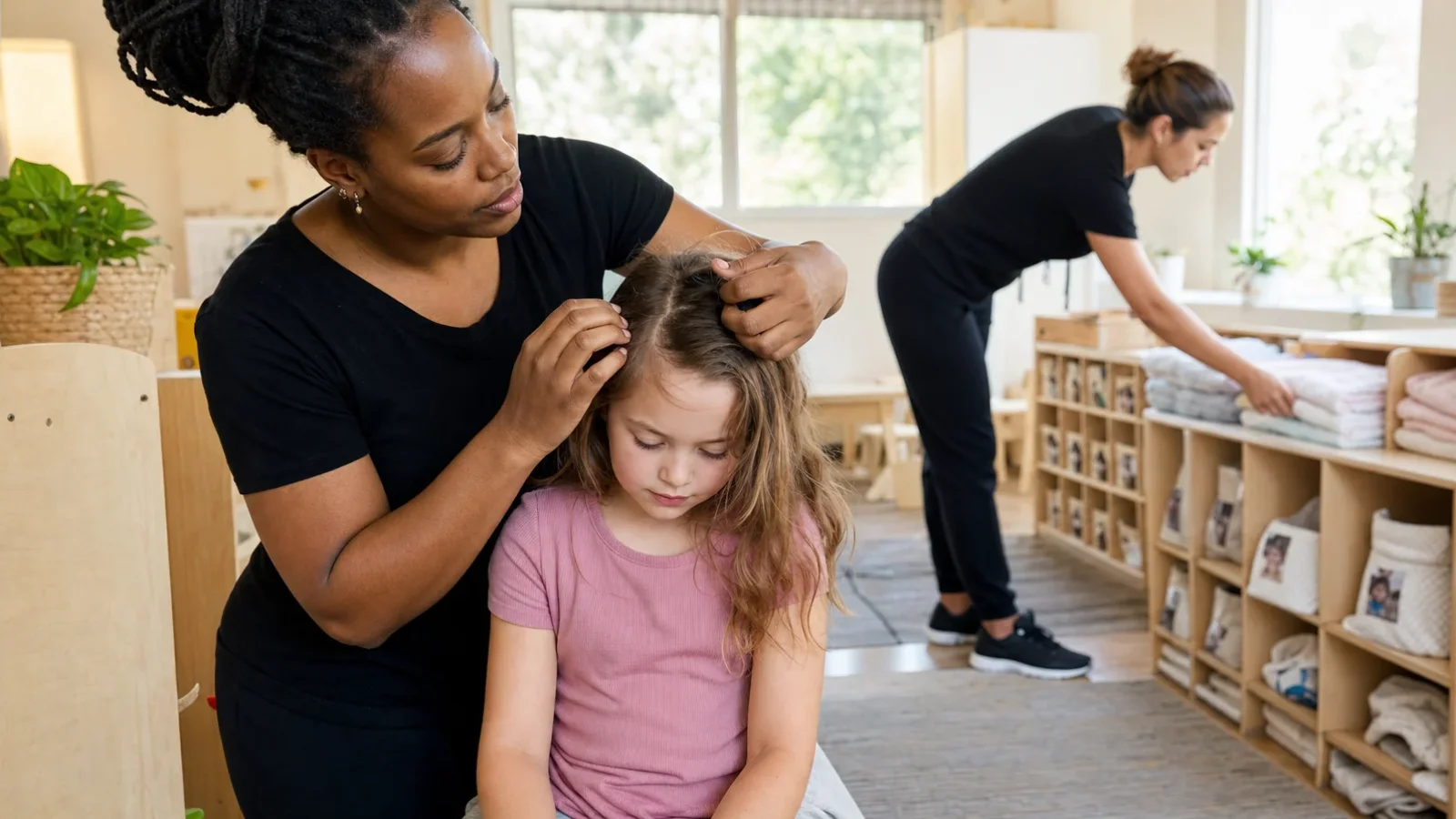
Head lice can create anxiety in a child care program, but they are manageable.
The most important facts are:
- Head lice live on the scalp and feed on human blood.
- They spread mainly through direct hair-to-hair contact.
- They do not jump or fly.
- They do not spread disease.
- They are not caused by poor hygiene.
- Pets do not carry or spread human head lice.
- Extensive facility-wide cleaning is usually unnecessary.
- Children generally do not need to be sent home early merely because lice are discovered.
- “No-nit” policies are discouraged by major medical and school health organizations.
A calm, written response protects children better than panic, public identification, aggressive cleaning, or automatic exclusion.
What Are Head Lice?
Head lice are small parasitic insects that live close to the human scalp.
Their life stages include:
- Nit: An egg attached firmly to a hair shaft
- Nymph: A newly hatched, immature louse
- Adult louse: A mature insect that moves through the hair and feeds from the scalp
Live lice are small, move quickly, and avoid light. Nits are easier to see but are frequently confused with:
- Dandruff
- Hair product residue
- Dirt
- Scabs
- Fabric fibers
- Empty egg casings
The best evidence of an active infestation is finding a live crawling louse.
Nits found very close to the scalp may support the diagnosis, but nits farther down the hair shaft are often old, empty, or nonviable.
If staff or families are uncertain, encourage confirmation by a qualified health care professional.
How Head Lice Spread
Head lice spread primarily through direct hair-to-hair contact.
This may happen while children:
- Play closely
- Hug
- Read side by side
- Take selfies
- Rest with heads touching
- Participate in sports
- Share sleeping areas
Less commonly, spread may occur through recently used personal items such as:
- Combs
- Brushes
- Hats
- Hair accessories
- Scarves
- Helmets
- Towels
- Pillows
Lice cannot survive long away from a human scalp, so transmission through floors, carpets, furniture, and ordinary classroom objects is much less likely than direct head contact.
Signs That May Suggest Head Lice
Possible signs include:
- Frequent scalp scratching
- Tickling or crawling sensation
- Irritability
- Trouble sleeping
- Red bumps or scratch marks
- Sores caused by repeated scratching
- Live lice in the hair
- Nits attached firmly near the scalp
Common locations include:
- Behind the ears
- At the back of the neck
- Along the hairline
- Near the crown
Some children have no symptoms, especially during an early infestation.
Itching alone does not confirm lice. Dry skin, eczema, hair products, allergies, and other conditions can also cause scalp irritation.
How Staff Should Respond to a Suspected Case
When a staff member suspects head lice:
- Protect the child’s privacy.
- Avoid making an announcement in front of peers.
- Notify the director or designated staff member.
- Follow the program’s written procedure.
- Contact the family privately.
- Explain what was observed without claiming certainty if no live louse was found.
- Provide current, reputable treatment information.
- Document the communication according to program policy.
- Review whether close-contact children or families should be notified.
- Follow licensing or health department requirements.
Do not:
- Shame the child
- Separate the child visibly from peers
- bag the child’s belongings in front of the group
- Announce the child’s name
- Post a public notice identifying the classroom family
- Apply treatment without proper authorization
- Cut the child’s hair
- Use pesticides on the child or environment
If staff are not trained to identify lice accurately, the family should be encouraged to seek confirmation.
Should a Child Be Sent Home Early?
Current CDC guidance states that children with head lice do not need to be sent home early from school. They may complete the day, begin appropriate treatment at home, and return after treatment has begun.
Child care programs should also review:
- State licensing rules
- Local health department guidance
- The program’s illness policy
- Medical consultant recommendations
- Contract requirements
A program may contact the family and arrange normal pickup at the end of the day while minimizing close head-to-head contact.
Immediate exclusion may create:
- Unnecessary missed work for families
- Stigma
- Lost instructional time
- Pressure to use treatment before diagnosis
- Incentives not to report future cases
When Can the Child Return?
In general, a child may return after appropriate treatment has started, subject to current program and local requirements.
The program may ask the family to confirm:
- Treatment was started
- Product instructions were followed
- The child is being rechecked
- A second treatment will occur if required by the product
- The provider will be notified if live lice remain
Do not require a child to be completely free of every nit unless an applicable rule specifically requires it.
A staff member who performs a recheck should be trained, respectful, and discreet.
Communicating With the Child’s Family
Use neutral language.
A provider might say:
We noticed signs that may be consistent with head lice, including persistent scratching and something attached near the scalp. We recommend checking for live lice and contacting your child’s health care provider or pharmacist if you are unsure. Your child does not need to be embarrassed, and head lice are not related to cleanliness.
Give the family written information covering:
- How to check the hair
- Treatment options
- The importance of following product directions
- When to recheck
- Cleaning steps
- Return-to-care policy
- Who to contact with questions
Avoid recommending a specific medication unless the program’s qualified medical professional is authorized to do so.
Notifying Other Families
Notification rules vary.
When notification is appropriate:
- Protect the affected child’s identity.
- State that a case has been identified.
- Explain that head lice are common and do not spread disease.
- Encourage families to check children.
- Share signs and current treatment resources.
- Explain the program’s response.
- Avoid alarmist language.
Do not disclose:
- Child’s name
- Family identity
- Address
- Treatment choice
- Medical history
- Classroom gossip
A broad notice to every family in a large program may not always be necessary. Follow current policy, licensing guidance, and the extent of close contact.
What Families Should Know About Treatment
Head lice can be treated with over-the-counter or prescription products.
Families should:
- Confirm the diagnosis
- Read and follow all label instructions
- Use only products appropriate for the child’s age
- Avoid combining treatments unless directed
- Complete retreatment when required
- Check household members and close contacts
- Treat infested household members as advised
- Continue checking the hair after treatment
- Contact a health care professional if treatment fails
The CDC advises consulting a health care provider before treating very young children.
Treatment failure may result from:
- Misdiagnosis
- Incorrect use
- Failure to repeat treatment when needed
- Reinfestation
- Product resistance
- Use of conditioner before certain treatments
- Insufficient contact time
Providers should not apply lice medicine at child care unless medication administration is permitted, properly authorized, and consistent with licensing rules.
Avoid Unsafe or Unproven Treatments
Families and providers may hear about home remedies such as:
- Mayonnaise
- Olive oil
- Butter
- Petroleum jelly
- Essential oils
- Kerosene
- Gasoline
- Animal flea products
- Pesticide sprays
- Plastic bags placed over the hair
Some methods are unproven; others are dangerous.
Never use:
- Flammable liquids
- Agricultural pesticides
- Pet products
- Fumigant sprays
- Foggers
- Products not labeled for human head lice
- Plastic covering that could obstruct breathing
The CDC does not have evidence that suffocating lice with mayonnaise, oils, butter, or similar substances is effective.
Cleaning the Child Care Environment
Head lice do not survive long away from the scalp.
Reasonable cleaning may include:
- Washing recently used bedding, towels, dress-up clothing, or washable soft items
- Drying washable items at an appropriate heat setting
- Vacuuming areas where the affected child rested
- Cleaning or isolating shared combs and brushes
- Inspecting shared helmets or headgear
- Separating personal belongings
- Following product and public health guidance
CDC guidance recommends focusing on items used during the two days before treatment.
Items that cannot be washed or dry-cleaned may be sealed in a plastic bag for the period recommended by current guidance.
Do not:
- Close the building solely for lice cleaning
- Spray classrooms with insecticide
- Fog rooms
- Treat carpets chemically
- Discard furniture
- Throw away toys unnecessarily
- Conduct expensive whole-building decontamination
The risk of infestation from a louse that has fallen onto furniture or carpet is small.
Combs, Brushes, Bedding, and Dress-Up Clothes
Programs serving young children should have routines that reduce sharing of personal items.
Combs and brushes
Ideally, each child uses individually labeled grooming tools.
If an item was used by a child with lice, follow current guidance for cleaning, such as soaking it in sufficiently hot water for the recommended time when the item can safely tolerate that temperature.
Bedding
Use individually assigned and stored:
- Sheets
- Blankets
- Pillows when age-appropriate
- Rest mats
Wash recently used items according to current guidance and program procedures.
Dress-up clothing
Dress-up hats, scarves, wigs, and helmets can be difficult to manage.
Programs may:
- Limit items that touch the hair
- Assign certain items individually
- Clean items between users
- Temporarily remove difficult-to-clean headwear
- Emphasize dress-up materials that do not rest on the head
Routine cleaning and sensible limits are preferable to eliminating imaginative play entirely.
Prevention Strategies
No prevention method can guarantee that lice will never enter a group program.
Providers can reduce risk through practical habits.
Teach children:
- Avoid direct hair-to-hair contact when possible
- Do not share combs or brushes
- Do not share hats, scarves, or hair accessories
- Keep personal items in assigned spaces
- Ask staff before sharing clothing or costumes
Program practices may include:
- Individual cubbies
- Separate bedding
- Labeled personal care items
- Adequate spacing for coats
- Regular family education
- Clear reporting procedures
- Discreet response
- Staff training
Do not make children fearful of normal friendship or physical affection. The goal is sensible boundaries, not alarm.
Routine Screening
Mass screening or classroom-wide “nit checks” can lead to false identification and embarrassment.
If screening is used:
- Follow local policy
- Ensure staff are trained
- Protect privacy
- Use adequate lighting
- Avoid public lines or group announcements
- Focus on live lice
- Refer uncertain findings for confirmation
- Document appropriately
Routine screening should not replace family education and prompt response to reported cases.
Misdiagnosis is common when nonmedical staff rely only on small white particles in the hair.
Supporting a Child With Itching or Scalp Sores
Repeated scratching may cause irritated skin or sores.
Providers should:
- Discourage scratching gently
- Keep fingernails reasonably clean
- Notify the family
- Watch for redness, swelling, drainage, warmth, or pain
- Follow first-aid and illness policies
- Recommend medical evaluation when infection may be present
Do not apply medicated creams, antiseptics, or lice products without proper authorization.
Urgent medical care may be needed for severe allergic reaction, breathing difficulty, significant swelling, or another acute symptom.
Staff Members and Head Lice
Adults can also get head lice.
Staff should report suspected infestation privately according to the personnel policy.
The program should address:
- Confirmation
- Treatment
- Return to work
- Close-contact notification
- Personal belongings
- Confidentiality
- Avoidance of head-to-head contact until treatment begins
Do not shame or publicly identify an employee.
Employment decisions should follow applicable law, health guidance, and written policy.
Written Policy Elements
A useful head lice policy should cover:
- Definition of suspected and confirmed infestation
- Who may examine a child
- Privacy
- Family notification
- Whether the child completes the day
- Return requirements
- Treatment documentation, if any
- Rechecking
- Cleaning
- Classroom notification
- Staff cases
- Recordkeeping
- Licensing or health department reporting
- When medical advice is recommended
The policy should be shared with families before an outbreak.
Avoid outdated language that promises prevention, requires total nit removal, or automatically excludes children for long periods.
Preventing Stigma
Head lice can affect families from any background.
Providers should say clearly:
- Lice are not caused by dirtiness.
- Anyone with hair can get them.
- A case is not evidence of neglect.
- Reporting helps the program respond.
- The child’s privacy will be protected.
Do not:
- Make jokes
- Refer to a “lice family”
- Allow teasing
- Display names
- Discuss cases at pickup where others can hear
- Blame one child for an outbreak
A stigma-free response makes early reporting more likely.
When to Contact Public Health or Licensing
Most health departments do not require individual head lice reporting, but rules vary.
Contact the appropriate authority when:
- Required by state or local rule
- The program is unsure about exclusion
- Cases continue despite treatment
- Many children are affected
- Families report treatment failure
- There is conflict about policy
- Unsafe treatment may have occurred
- Licensing guidance is unclear
Use the current state or local source rather than an old handbook.
Frequently Asked Questions
Do head lice spread disease?
No. Head lice are a nuisance but are not known to spread disease.
Are head lice caused by poor hygiene?
No. Cleanliness, income, and household conditions do not determine who gets head lice.
Should a child be sent home immediately?
Current CDC guidance says a child does not need to leave school early. The child can complete the day, begin treatment at home, and return after treatment begins, subject to local child care rules.
Does every nit have to be removed before return?
Usually not. Major medical and school health organizations discourage “no-nit” policies because nits may remain after successful treatment and are unlikely to transfer.
Does the entire child care center need deep cleaning?
No. Focus on recently used personal items, bedding, combs, brushes, and areas where the child rested. Extensive decontamination is unnecessary.
Can pets spread head lice?
No. Human head lice do not live on or spread through household pets.
What if treatment does not work?
The family should review the diagnosis and instructions and contact a health care provider or pharmacist. Misdiagnosis, incorrect use, resistance, or reinfestation may be involved.
Related Resources
- Meeting the Childcare Needs of School-Aged Children
- Recognizing the Signs of Bullying in Young Children
- How to Choose Child Care: A Parent’s Complete Guide
- Questions to Ask When Interviewing a Daycare Provider
- Signs of a Good or Bad Childcare Center
- Signs of a Good or Bad Home Daycare
- Where Can I Find Information on Child Care Regulations?
Sources
- CDC: About Head Lice
- CDC: Providing Care for Individuals With Head Lice
- CDC: Treatment of Head Lice
- CDC: Clinical Care of Head Lice
- HealthyChildren.org: Head Lice—What Parents Need to Know
- HealthyChildren.org: Controlling Head Lice and Reducing Stigma
- HealthyChildren.org: Head Lice Treatment Myths and Realities
- HealthyChildren.org: When to Keep Your Child Home From Child Care
ChildCareCenter.us is an independent directory and educational resource. Head lice exclusion, notification, screening, treatment documentation, medication administration, and reporting rules vary by state, locality, school, and child care program and may change. Follow current licensing, public health, medical, and product guidance.